Valentine’s Day Drinks That Love You Back
Valentine’s Day drinks that love you back are a silly promise, so I am not making it. A cocktail will not sort out a relationship, start one, or repair the thing you should have said in February of last year. What I can do is two drinks for two adults: a sidecar each, and a small bottle of Manhattan you split over big ice. Make them properly, sit down, and let the drinks be drinks. If the evening is just you and a friend, the same specs apply. Romance is not an ingredient I keep on the shelf.
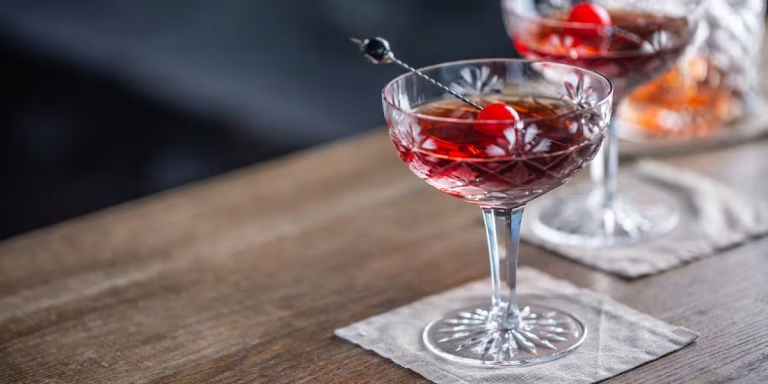
Both drinks are spirit-first. The sidecar is cognac, lemon and orange liqueur, shaken. The Manhattan is bourbon and sweet vermouth, stirred and lightly watered so it is ready when you are. Neither needs a heart-shaped glass. A coupe and a rocks glass will tell the truth, which is all I want from tableware tonight.
Two sidecars, made as two singles
Do not build a double in one tin and hope the split is fair. Shake two singles. The spec is the same both times, and it is the classic shape: strong, tart, not a pudding.
- 60 ml cognac
- 20 ml lemon juice
- 15 ml Cointreau, or another dry-ish triple sec
Shake hard with ice and strain into a chilled coupe. A thin lemon peel is optional. Sugar on the rim is not my house style. It makes the first sip sweet and the rest of the glass confused. If you only own brandy that is not cognac, use it and do not apologise, but taste the first shake. A rough young brandy may want the full 15 ml of Cointreau. A fine cognac may be happier at 10 ml of the liqueur if it already tastes sweet. Start at 15 ml. You can always decide the second coupe wants less. You cannot un-sweeten a glass you have already sugared.
Juice the lemon when you start, not in the morning, and measure it. Twenty millilitres is not a squeeze you guess. Two drinks need 40 ml of lemon, 120 ml of cognac and 30 ml of Cointreau. That is the whole shopping line for this half of the evening, plus ice and two coupes that have seen the freezer.
One small bottle, two Manhattans
The second drink is shared, which is practical rather than symbolic. Stir a half-bottle for two, chill it, and pour when you want it. You are not performing a second round from scratch in the middle of dinner.
- 120 ml bourbon
- 60 ml sweet vermouth
- 4 dashes aromatic bitters
- 30 ml cold water
Stir that together in a jug, bottle it, and put it in the fridge. It is two Manhattans, pre-diluted so a large cube does not have to do all the work. Pour each half over a big cube in a rocks glass. If you would rather drink them up, chill two small glasses and pour without extra ice, but then drink them while they are cold. The 30 ml of water is the dilution you would have stirred in. Leave it out and the bottle will taste hot. Add more than that and you have watered whiskey before anyone sits down.
Rye works in place of bourbon if that is the bottle open. Sweet vermouth has to be fresh. This drink is half vermouth by the uncut spec, so a tired bottle will be half the glass. Fridge it, and buy a small one if you rarely use it. A cherry is traditional and fine. A handful of them is a dessert you did not plan.
Chocolate, if you must, in one glass only
If you want the sidecar to lean towards dessert, add 10 ml crème de cacao to one of them, not both, and taste before you even think about a second dash. It sweetens fast. Ten millilitres is already a change of subject. Fifteen and you have built a different drink, closer to a pudding, and the lemon will be shouting to be heard. I would make the plain sidecar first, decide you actually want the chocolate, and only then add it to the second shake. Do not pour cacao into the Manhattan. The vermouth is sweet enough, and the two drinks are better when they are not the same idea twice.
There is a batching habit under the Manhattan bottle, and it is the same one I use when the table is bigger than two. If you want the method for scaling a stirred drink without losing it in meltwater, that is how to batch cocktails. For two people you do not need a crowd. You need the water measured and the fridge doing the chilling.
How I would actually run the evening
Coupes in the freezer after lunch. Lemon, cognac and Cointreau on a tray. The Manhattan bottle mixed and cold before anyone is hungry. Shake the sidecars as you sit down, before the food, because a sour waits worse than a stirred drink in the fridge. Eat something salty. Cheese, olives, or a bag of crisps will do more for cognac than a chocolate fountain. Then pour the Manhattans when you want a second drink, not because a calendar said the night required one.
Water on the table still applies when there are only two of you. These are full glasses. One sidecar and, later, one Manhattan is a complete evening. The drinks do not love you back. They are well made, they are cold, and they leave you in the conversation instead of in the kitchen. That is as sentimental as I am willing to get.
These are full-strength serves for adults of legal drinking age. One is a drink, not a starter. If you are driving, pregnant, or on medication, skip the alcohol.
If you want bubbles: two French 75s, built as singles
The sidecar and the Manhattan are the evening I would actually pour. Sometimes the table wants a sparkling glass anyway, and I would rather give them a measured one than a flute of sweet fizz with a story attached. A French 75 is gin, lemon, a little syrup, and cold sparkling wine. It looks dressed. It is still a drink with 60 ml of spirit in it. I make two singles. I do not build a double and hope the split is fair, and I do not shake the wine.
Use a dry sparkling wine, not a dessert bottle. Prosecco is fine. Champagne is fine if you already had it. The wine is the length, not the point. If the only bubbles in the house are sweet, cut the syrup to nothing and taste before you serve, or skip this and stay with the sidecar. Sweet wine plus syrup is how a sharp drink becomes a puddle with a bow on it.
French 75, one glass
- 60 ml gin
- 15 ml fresh lemon juice
- 10 ml one-to-one simple syrup
- Cold dry sparkling wine, about 60 to 90 ml, to top
Shake the gin, lemon and syrup with ice until the tin is cold. Fine-strain into a chilled flute or a small wine glass. Top with the sparkling wine. Do not stir hard. One lift with a barspoon is enough to bring the spirit up through the bubbles. A thin lemon peel, pinched, is optional. Sugar on the rim is not. Two drinks are 120 ml gin, 30 ml lemon and 20 ml syrup, shaken separately so each glass gets a real chill. The wine stays in the bottle until the glasses are in your hand. If you open it at lunch to “get ahead,” you will pour flat wine on a careful sour and the whole point of the drink will have left the building.
Ten millilitres of syrup is deliberate. The classic sometimes calls for more sugar because the lemon was a rough squeeze and the wine was stern. Start at 10. If the gin is harsh and the lemon is vicious, the second glass can take 15 ml. Write nothing romantic on the recipe card. Write the measures. A friend across the table gets the same spec as anyone you are trying to impress. The drink does not know the difference, and it should not have to.
What goes wrong
- You shake the sparkling wine. The tin erupts, the drink is flat, and you have lost the only reason to make this instead of a gin sour.
- You pour a heavy hand of syrup because it is a celebration. The gin disappears and the lemon tastes like furniture polish under the sugar.
- The wine is warm. Bubbles die on the cold sour and you are left with a tall, slightly sour gin that went nowhere.
- You build both drinks in one tin and eyeball the split. One glass is a double. The other is mostly wine. Nobody has the drink you think you made.
- You add the chocolate from the sidecar experiment. Cacao and sparkling wine is a different, sweeter drink. Keep it out of this glass.
I would still start the evening with the sidecars if people are hungry, and I would keep the Manhattan bottle for the drink that does not depend on bubbles surviving a conversation. The French 75 is the option when someone wants a long sparkling glass and you refuse to hand them unmeasured fizz. Sixty millilitres of gin, a short shake, wine last. Then sit down. The glass is not a speech, and it will not do the talking for you.